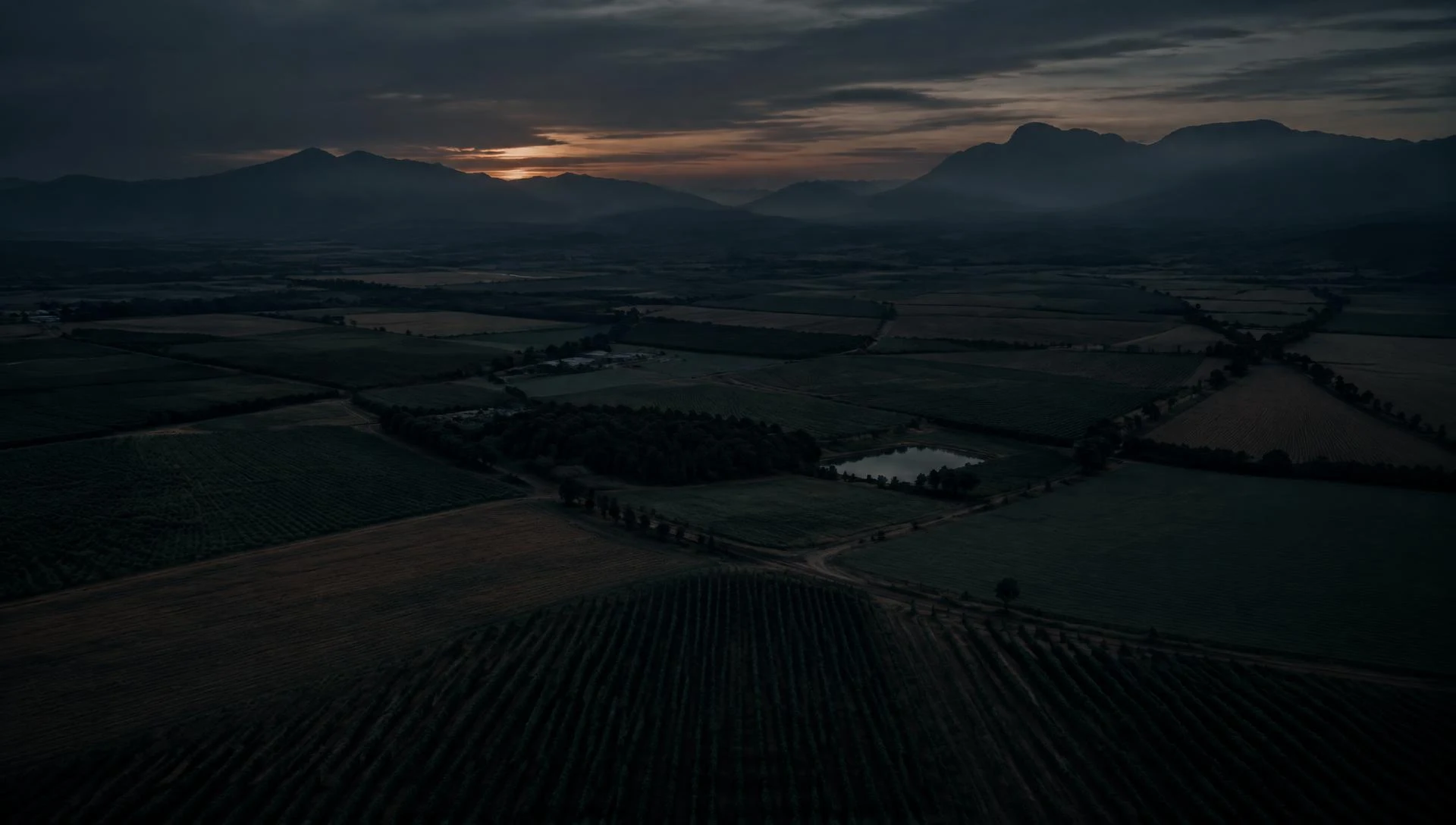
More care for every hectare.
Higher yield potential. Less water. No wheel tracks. Agricultural drones change how you reach your crop — without driving through it.
Less water vs tractor spraying
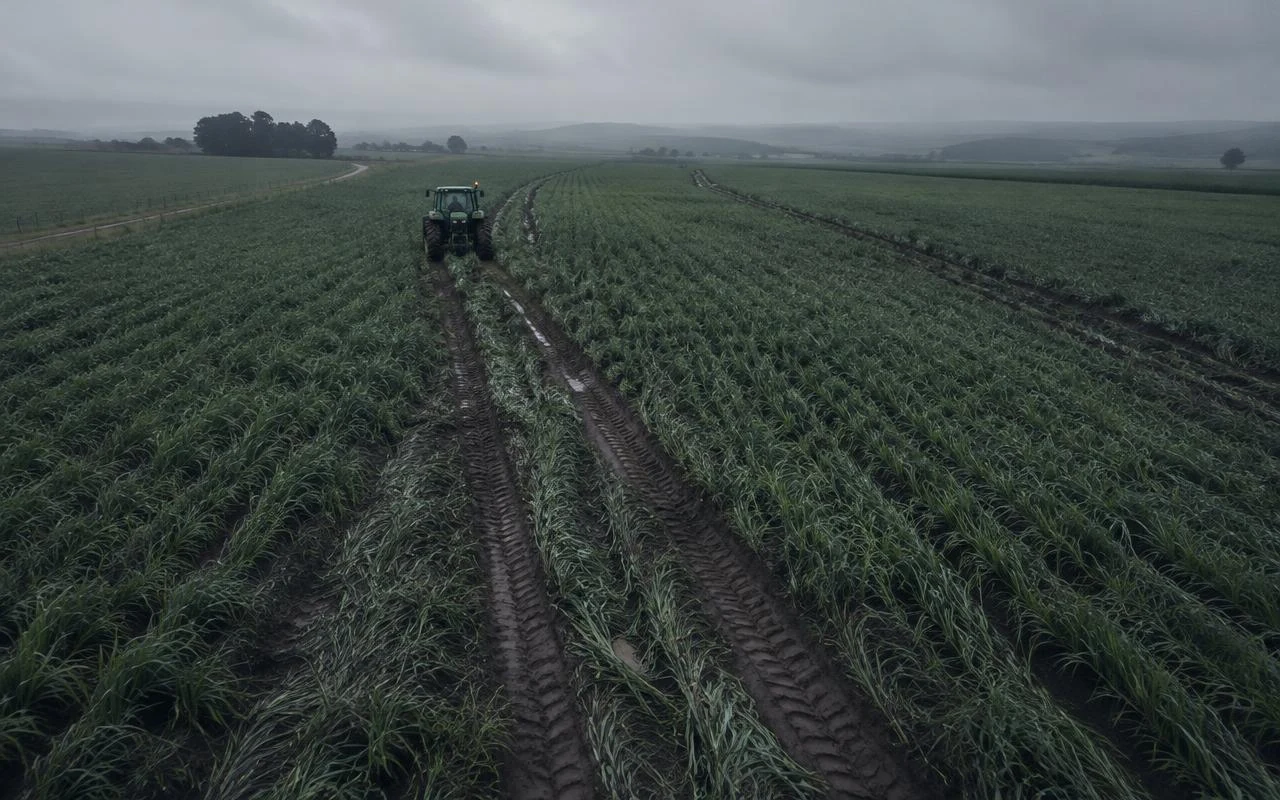
Wheel tracks from spraying
Tracks you don't have to make.
A tractor pass can crush crop rows and compact soil. Drone application leaves those rows untouched by wheels.
Illustrative images
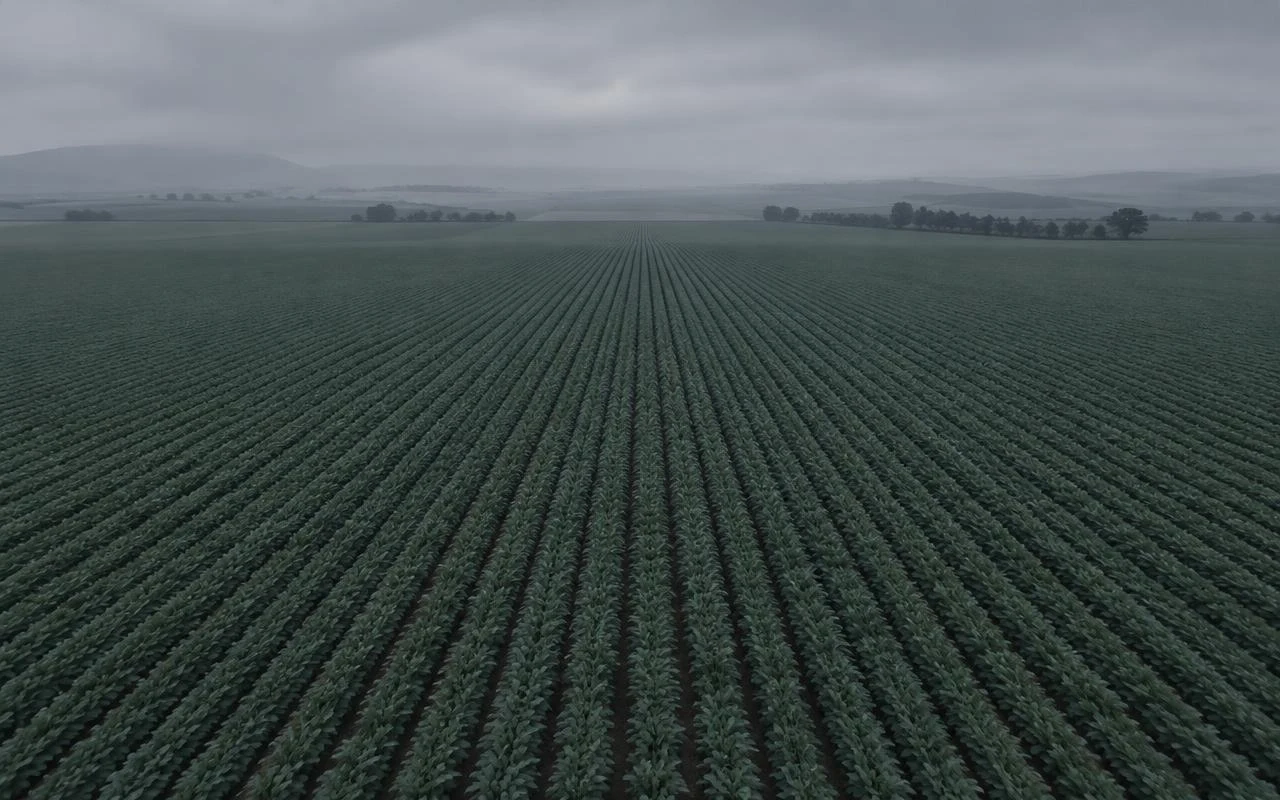
Protect the crop already growing.
Tractor wheels flatten plants on each pass. A drone applies product from above, leaving those rows standing and protecting more of every hectare. Keeping plants intact supports yield potential; actual results depend on your crop, conditions and treatment.
Nothing drives through your field.
Drone spraying creates no wheel tracks and adds no wheel compaction to the soil. Rows remain intact without another tractor pass, helping preserve soil structure and access crops without driving over them. It avoids new wheel damage rather than reversing existing compaction.
Less carrier water. Precise application.
Fine atomised droplets can use up to 90% less water than conventional tractor spraying. Lower carrier volumes reduce water handling and refilling. Application volume is selected for the crop, product label and field conditions — savings vary with the job.
Keep the application on target.
Flight height, speed and droplet size are set for each application. Wind and weather conditions inform flight decisions, while controlled spray settings help limit drift. Responsible spraying still means observing product restrictions and suitable operating conditions.
A planned route, not a guess.
Mapped field boundaries and obstacles guide repeatable flight paths. Planned speed, height and application rates support even coverage, with the pilot supervising operations and responding to conditions throughout the job.
A clear record of the work.
Flight telemetry records where and when the aircraft operated, supporting application records and review. Combined with careful product selection and rate planning, it helps make crop protection precise and accountable.